
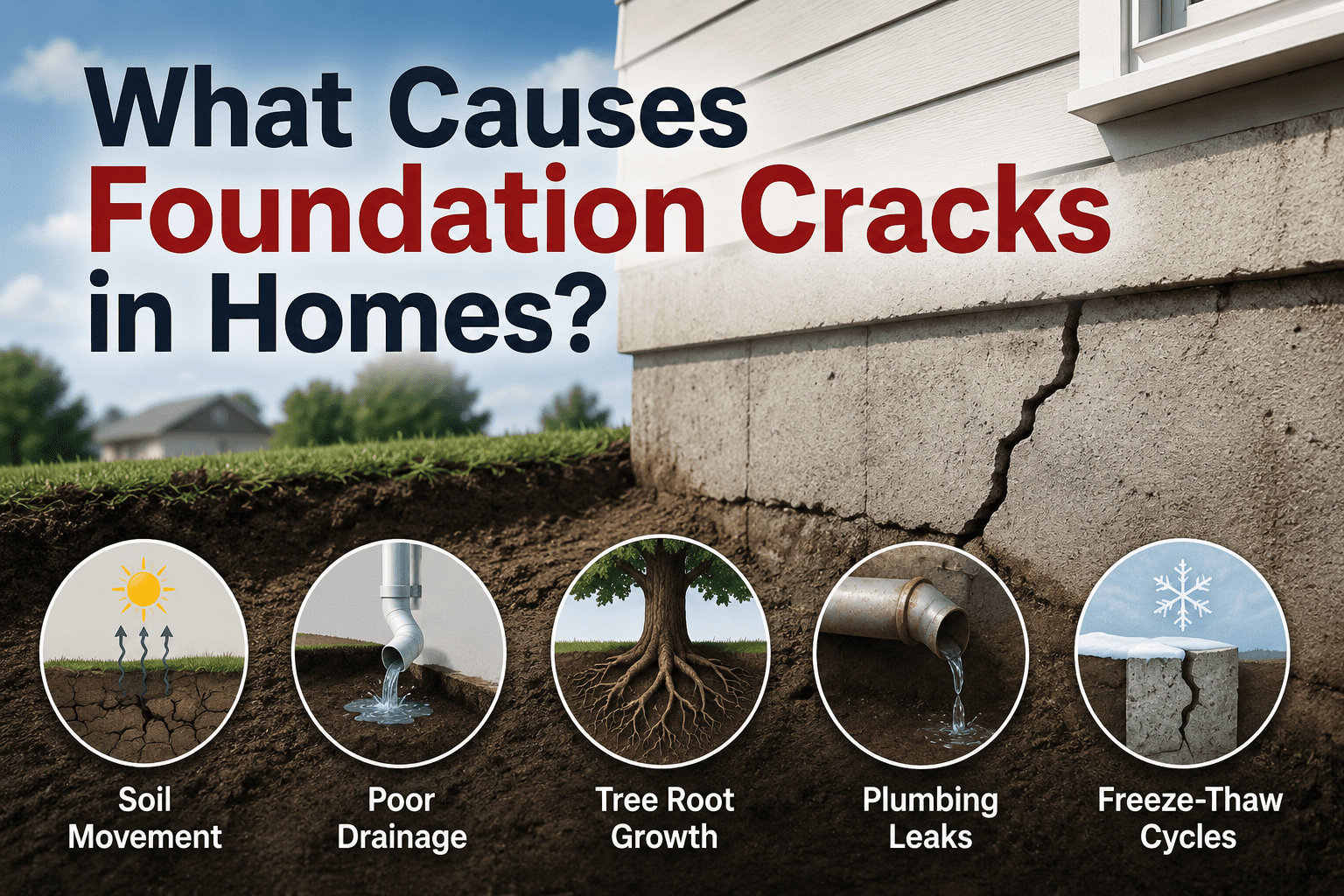
A thin line running along the basement wall is easy to dismiss. It has probably been there for a while. The house feels solid. Nothing is visibly alarming. That is exactly the reasoning that has led homeowners into expensive structural repairs they might have avoided entirely. Foundation cracks do not announce themselves dramatically at the start. They begin small, grow slowly, and attract real attention only after the damage is significant. For some families, the moment of discovery came during a home sale, when an inspector flagged something the sellers had been living beside for years, seeing it but never quite addressing it.
Who This Actually Applies To
Homeowners who notice any visible cracking in basement walls, floor slabs, or exterior foundation surfaces should take it seriously, regardless of whether the house otherwise feels stable. Buyers and sellers in active transactions face additional stakes. Foundation issues discovered during inspection affect property valuation and negotiation in ways that few other defects do. Properties in areas with expansive clay soils, poor drainage, or nearby construction activity carry a higher baseline risk. These are not problems that resolve on their own.
Not Every Crack Means the Same Thing
Foundation cracks vary in type, origin, and severity. Hairline cracks are extremely narrow surface separations that frequently develop as concrete cures. They are common and often cosmetic rather than structural. Wider cracks, those visible from a normal standing distance or that allow a credit card to be inserted, indicate more significant movement. Cracks wider at one end than the other suggest differential settlement. Horizontal cracks carry the highest risk level because they indicate lateral pressure acting against the wall from surrounding soil.
Vertical, Horizontal, Diagonal: What the Direction Tells You
Vertical cracks typically result from concrete shrinkage during the curing process. They are usually narrow and may allow water infiltration but do not generally indicate structural failure. Diagonal cracks running at roughly forty-five degrees suggest differential settlement, where one section of the foundation is sinking at a different rate than the rest. Horizontal cracks in basement walls are the most serious type. They indicate that the wall is experiencing bending pressure from soil or hydrostatic force pushing against it from the outside. This type requires prompt professional evaluation without exception.
The Ground Beneath the Home Moves More Than Most People Expect
Soil is not static. It expands when it absorbs moisture and contracts when it dries. In clay-heavy soils, this seasonal cycle of expansion and contraction creates repeated lateral and vertical pressure against foundation walls. Over years, that movement creates gaps, shifts, and cracks in foundations that were otherwise well built. Drought conditions accelerate the process by causing significant soil shrinkage beneath the footing, which allows sections of the foundation to settle unevenly.
Large tree roots near the foundation displace soil and, over a long enough timeline, physically apply pressure to foundation walls. Root-driven damage is slow but can become structurally significant in older properties with large trees growing in close proximity.
Water Is the Slow Destroyer of Foundation Integrity
Hydrostatic pressure is the most damaging force most residential foundations face. When saturated soil surrounds a foundation wall, the water within that soil pushes against the wall continuously.
Over time, that pressure creates cracks and allows water to infiltrate. Once water is inside the concrete, it expands during freeze cycles, widening the crack further. Repeated wet-and-freeze cycles progressively damage the material from within.
Poor drainage accelerates this dramatically. Gutters that discharge water near the foundation, grading that slopes toward the home instead of away from it, and landscape features that collect water near the foundation walls all compound hydrostatic pressure. Water appearing inside the basement is often the first visible signal that this process is already well advanced.
Temperature and Material Fatigue Over Time
Concrete expands in heat and contracts in cold. Without adequate control joints to accommodate this movement, thermal cycling creates stress that results in cracking. Homes in climates with large seasonal temperature swings, like Long Island, experience more of this cycling than homes in more stable regions. Over decades, the material fatigues and creates pathways for moisture entry.
Construction quality during the original build also plays a role. Concrete that was not properly mixed, poured, or cured is more vulnerable to cracking under normal loading conditions. Inadequate reinforcement or incorrect water-to-cement ratios produce concrete that performs below specification from the start.
How Foundation Problems Show Up in Daily Life
Foundation issues rarely stay contained to the foundation. Doors and windows that suddenly stick or no longer close squarely are a common early indicator of shifting. Gaps appearing between walls and ceilings, or between walls and floors, signal movement. Floors that feel uneven or slope noticeably suggest a settling issue below. White mineral deposits, called efflorescence, appearing on basement walls indicate that water is actively moving through the masonry and evaporating at the surface.
When Watching Becomes Waiting Too Long
Monitoring a crack over time is a reasonable early step. Marking its edges and checking for growth provides useful information. But monitoring is not a repair. Cracks that widen, multiply, or are accompanied by any water intrusion need professional evaluation. Horizontal cracks should never be left under observation alone. The structural risk they represent requires immediate assessment by someone qualified to evaluate it.
Foundation issues discovered prior to a home sale should be disclosed and addressed transparently. Attempting to cover or minimize foundation problems creates legal and financial liability that typically far exceeds the cost of proper repair.
Preventing Foundation Cracks From Coming Back
Drainage is the most powerful preventive tool available. Keeping gutters clear, extending downspouts well away from the foundation, and maintaining a grade that directs water away from the home address the most common driver of foundation deterioration. Interior and exterior waterproofing systems can be added to properties that face persistent moisture challenges.
Annual inspections in older homes catch new cracks before they progress into structural problems. Promaster Maintenance Corp provides foundation waterproofing services that protect Long Island homes from the water intrusion that drives most foundation damage.