
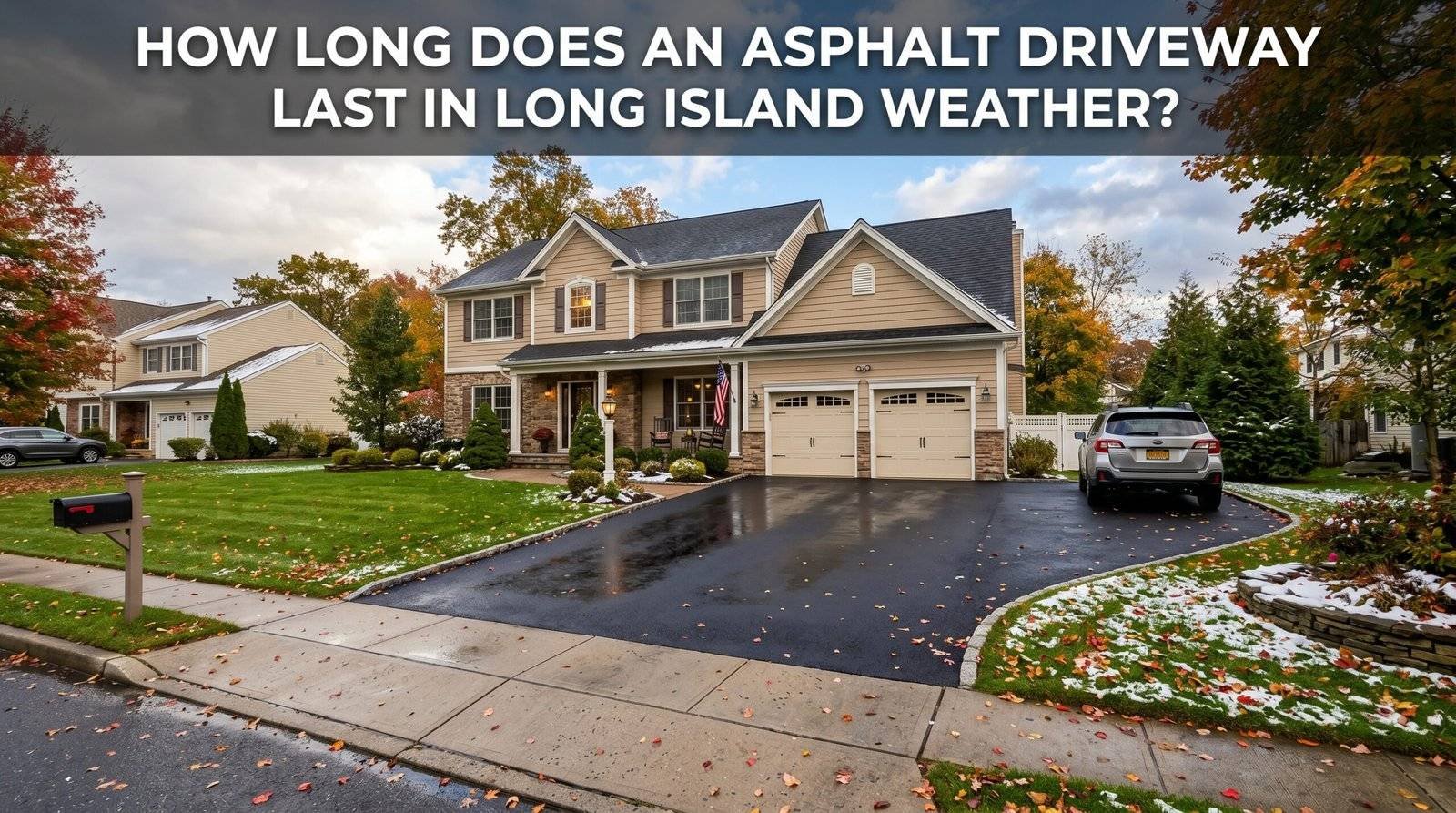
There is a particular kind of embarrassment that comes with a crumbling driveway. The holidays would arrive, family would pour in from every direction, and the first thing everyone saw was a surface covered in cracks, dark stains, and crumbling edges.
Some homeowners brushed it off year after year, filling small spots and hoping the winter would not make things worse. By the time they finally called someone, the damage had gone well past the surface. Long Island’s climate is uniquely aggressive toward asphalt.
The Clock Starts Earlier Than You Think
Most asphalt driveways are built with an expected lifespan of 20 to 30 years. That number assumes proper installation, consistent maintenance, and cooperative weather.
On Long Island, the realistic figure is closer to 15 to 20 years, and sometimes less. The region’s freeze-thaw cycles, humid summers, heavy rains, and coastal salt exposure apply continuous pressure on the surface from every direction.
No single season gives asphalt a break, and the cumulative effect accelerates aging significantly compared to more stable climates.
What Quietly Works Against You From the Start
Several factors begin degrading asphalt before the first crack appears. Base quality matters more than most homeowners realize. A thin or poorly compacted base allows the surface to flex and settle unevenly under load.
Heavy traffic, particularly from delivery trucks or multiple vehicles, wears the surface faster than normal residential use. Poor drainage allows water to pool on and penetrate the surface, weakening the bond between the aggregate and the binder. All of these factors accelerate the timeline toward visible failure.
Why Long Island Makes the Timeline Shorter
Long Island occupies a climate zone that delivers almost everything asphalt dislikes. Winters are cold enough to freeze moisture inside pavement, but mild enough that thawing happens repeatedly throughout the season.
Summers bring humidity and temperatures that soften the surface. Spring rains are heavy and sustained. Coastal proximity means salt-laden air and aggressive road treatments that penetrate surface pores and break down the binder.
No single season is kind, and the combination of all four creates conditions that wear driveways down faster than the warranty suggests.
The Freeze-Thaw Cycle: The Real Engine of Destruction
This is the process that does the most damage and gets the least attention. Water seeps into small cracks during fall rains and snowmelt. When temperatures drop, that water freezes and expands.
The expansion forces the crack wider. When temperatures rise, the water moves deeper into the surface before the next freeze. This happens dozens of times in a single Long Island winter.
A hairline crack in October becomes a visible gap by February and a pothole by April. The cycle does not pause, and it does not reverse on its own without intervention.
Summer Heat Has Its Own Quiet Agenda
Asphalt softens in heat. On the hottest Long Island summer days, the surface becomes pliable enough that heavy vehicles leave impressions. Edges and transitions to adjacent materials tend to shift first.
UV exposure oxidizes the binder in the asphalt, turning it brittle over time. An oxidized surface cracks more readily in winter because it has lost the flexibility that allowed it to expand and contract without breaking. Summer and winter work together, degrading the surface from both ends of the temperature spectrum.
Salt, Runoff, and the Deterioration Nobody Sees Coming
Road salt applied during winter plowing migrates to residential driveways and penetrates the surface. It breaks down the asphalt binder from within, accelerating cracking and surface discoloration. Standing water compounds this.
A poorly graded driveway collects water rather than channeling it away. That water sits on the surface, seeps through, and softens the base layer below. When the base softens, the surface above it loses structural support and begins to crack or sink.
Coastal properties face additional persistent moisture exposure that inland driveways do not contend with.
Two Maintenance Habits That Add More Years Than Expected
Sealcoating is the most effective preventive step available to homeowners. Applied every two to three years, it creates a barrier against moisture, UV rays, and chemical penetration. It keeps the asphalt binder flexible and delays the oxidation that eventually makes surfaces brittle.
Most homeowners skip this step entirely because the driveway still looks acceptable. By the time problems appear, the window for cost-effective prevention has already closed.
Crack filling is equally straightforward. Any crack wide enough to notice should be filled before winter arrives. Once water enters a crack and freezes, that crack grows.
Addressing it in the fall costs a fraction of what the resulting repair or replacement will cost. These two habits, done consistently, can realistically extend an asphalt driveway’s service life by five to ten years.
Concrete vs. Asphalt: Which One Actually Holds Up Better Here?
Concrete driveways generally outlast asphalt. A well-installed concrete surface can last 30 to 50 years. Asphalt averages 20 to 25 years under ideal conditions and closer to 15 to 20 on Long Island. But concrete costs more upfront and presents its own set of vulnerabilities. It stains more visibly, resists seamless repair, and is susceptible to surface spalling from de-icing salts without proper sealing. Asphalt can be resurfaced when the base remains sound, which keeps long-term costs manageable. For homeowners focused on upfront costs and easier ongoing repair, asphalt remains a practical choice. For those prioritizing longevity over decades, concrete has the edge.
When Patching Stops Making Financial Sense
Alligator cracking, the network of interconnected fractures that spreads across a surface, is a sign that the base layer has been compromised. Potholes indicate structural failure below the surface. Sinking or uneven sections point to erosion or shifting in the base material. At this stage, patching treats symptoms without addressing the cause. Each patch buys a shorter period of relief than the last. Replacement becomes the more economical choice when the underlying structure is no longer sound.
Promaster Maintenance Corp has helped Long Island homeowners assess where their driveways actually stand and determine whether a sealcoat, a repair, or a full replacement is the right move.