
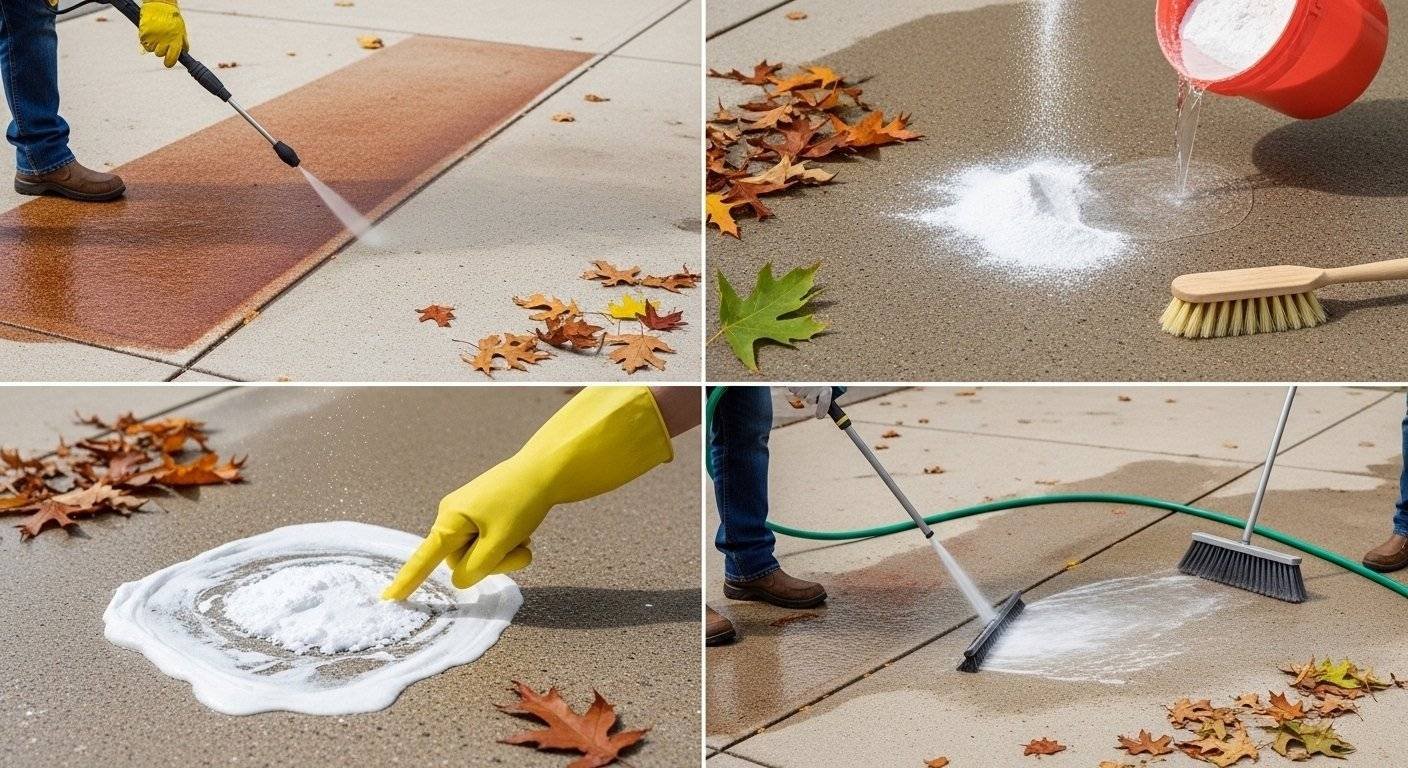
Every fall, the same pattern plays out across driveways everywhere. Leaves pile up, rain moves in, and by the time the season ends, the driveway looks like a patchwork of dark, stubborn stains that no amount of hosing seems to fix. It’s one of those problems that sneaks up quietly and overstays its welcome.
Why Do Wet Leaves Stain Driveways?
Wet leaves release tannins, which are organic compounds found in plant matter. When leaves decompose on a hard surface, their tannins seep into the material and bond chemically. The longer the leaves sit wet, the deeper the stain penetrates.
The dark, often rust-brown marks left behind aren’t just surface grime. They are the result of organic acids reacting with the porous structure of your driveway. Humidity, temperature, and leaf type all influence the severity of the staining.
How Different Driveway Materials React to Leaf Stains
Concrete is highly susceptible to tannin stains because it is naturally porous. Unsealed concrete absorbs organic matter quickly, making stains harder to remove once set. Asphalt is somewhat more forgiving due to its dark color, but the surface can still absorb residue over time, especially in areas with fine cracks.
Brick and paver driveways can retain stains in the joints and on the surface if not properly sealed. Natural stone driveways are often the most vulnerable because stone is highly porous and sensitive to acidic compounds. Sealed surfaces of any material resist staining significantly better than unsealed ones.
What to Do Immediately When Leaves Get Wet on Your Driveway
Speed is everything. The faster you remove wet leaves, the less time tannins have to bond with the surface. Use a leaf blower on dry days and a plastic rake or push broom on wet days. Avoid metal rakes, which can scratch sealed or softer surfaces.
After removing the bulk of the leaves, rinse the area with a garden hose to flush away loose residue. Do not let standing water sit on the driveway after rinsing. If water puddles regularly in certain areas, it can accelerate staining and indicate an underlying drainage issue that warrants attention.
How to Remove Fresh Leaf Stains from a Driveway
For stains caught within a few days, a solution of warm water and dish soap, applied with a stiff-bristled brush, often works well on concrete and pavers. Scrub in circular motions and let the solution sit for ten to fifteen minutes before rinsing.
Diluted white vinegar is another effective option for fresh organic stains. It breaks down the tannins without harsh chemicals. For slightly older stains, a baking soda paste applied directly to the mark and left for thirty minutes can lift surface residue before scrubbing and rinsing.
How to Remove Old or Set-In Leaf Stains
Once tannin stains have been sitting for weeks or months, household cleaners often fall short. Oxygen bleach, sold as a powder you mix with water, is a safer and more effective solution than chlorine bleach for organic driveway stains. It works by oxidizing the stain rather than bleaching the surface.
Apply the oxygen bleach solution generously, allow it to penetrate for twenty to thirty minutes, and scrub with a stiff brush. Repeat if necessary. For very stubborn stains on concrete, a commercial concrete degreaser or tannin-specific cleaner can be applied before pressure washing for best results.
Is Pressure Washing Safe for Removing Leaf Stains?
Yes, pressure washing is one of the most effective ways to remove leaf stains, but the technique matters. For concrete driveways, use a pressure washer with a 25-degree nozzle at 2,000 to 3,000 PSI. Keep the wand moving at a consistent distance to avoid etching or streaking the surface.
For pavers, reduce the pressure to avoid dislodging joint sand or damaging the surface coating. Brick driveways can handle moderate pressure, but should not be blasted directly at mortar joints. After pressure washing any surface, resealing is strongly recommended to prevent future staining.
DIY Cleaning vs Professional Driveway Cleaning
DIY cleaning works well for minor or fresh stains and routine maintenance. If you have the right equipment and take precautions, you can handle most seasonal leaf staining on your own. The challenge arises from deep-set stains on large surface areas or on delicate materials like natural stone.
Professional driveway cleaning services use industrial-grade equipment and surface-safe cleaning agents calibrated for specific materials. They can also assess whether any staining damage is cosmetic or structural, and recommend sealing or repairs where needed.
How to Prevent Wet Leaves from Staining Your Driveway
The most effective prevention strategy is sealing your driveway before fall. A high-quality concrete or paver sealer forms a barrier that prevents tannins from penetrating the surface. Plan to reseal every two to three years, or more frequently if you notice water no longer beading on the surface.
Installing leaf guards on gutters also helps reduce the volume of leaves deposited near your driveway. Parking your vehicle away from tree canopies when possible and raking regularly in the fall will go a long way toward keeping your driveway clean with minimal effort.
What If Leaf Stains Don’t Come Out?
Some stains, particularly those that have been through multiple wet-and-dry cycles, may not fully lift even with aggressive cleaning. At that point, surface resurfacing or overlays become an option for concrete driveways. For pavers, replacing individual units may be a more targeted fix.
When staining has significantly altered the surface appearance, professional surface restoration can make a significant difference. It’s worth consulting a driveway specialist before assuming the surface is permanently damaged.
Expert Tips from Driveway Professionals
Professionals consistently recommend sealing as the single most important preventive measure against organic staining. Beyond that, cleaning regularly throughout fall rather than waiting until the season ends significantly reduces the severity of staining.
Avoid mixing bleach with other cleaners, as this can create harmful fumes and damage certain driveway materials. Always test any cleaning product on a small, inconspicuous area first. For asphalt driveways, skip vinegar and other acidic cleaners entirely, as they can soften the surface. Stick to pH-neutral cleaners or those specifically formulated for asphalt.
Wrapping It Up
Wet leaf stains are a recurring seasonal challenge, but they don’t have to be permanent. Quick removal, the right cleaning approach, and proper sealing are the three things that make the biggest difference. For professional driveway cleaning, sealing, and restoration in the New York area, Promaster Maintenance Corp has the equipment and experience to restore your driveway and keep it protected season after season.