
Standing water in a yard looks like a minor inconvenience until it isn’t. Over time, it softens soil, kills grass, creates breeding conditions for mosquitoes, and quietly works its way toward your foundation. Most homeowners don’t think about drainage until a wet season leaves them with a soggy mess they can’t ignore.
Why Standing Water Is a Bigger Problem Than It Looks
Water that pools in the same spots after rainfall isn’t just an aesthetic issue. It indicates that the ground cannot absorb or redirect water quickly enough, often indicating poor grading, compacted soil, or inadequate drainage infrastructure. Left unresolved, chronic standing water causes soil erosion, turf damage, and increased pressure on structural foundations, and can seep into basements or crawl spaces.
Understanding the root cause before choosing a solution is critical. Installing a drainage system without addressing grading issues, for example, often yields disappointing results.
How to Diagnose Where Your Drainage Problem Actually Starts
Begin by observing your yard during and after a heavy rain. Note where water collects, how long it sits, and whether it migrates toward the house or away from it. Positive grading means the land slopes away from the foundation at a minimum of one inch per foot for the first six feet, which is the recommended minimum standard.
Also, inspect your downspouts. If they terminate directly against the foundation or in low spots, that single issue could significantly contribute to pooling. Soil compaction tests and a basic percolation test, where you dig a hole, fill it with water, and time how quickly it drains, can help identify whether infiltration capacity is the problem.
Choosing the Right Drainage Solutions for Your Property
There is no one-size-fits-all drainage fix. The right solution depends on the severity of the problem, the layout of the property, the soil type, and where the water ultimately needs to go. Common options include French drains, surface channel drains, dry creek beds, catch basins, and grading corrections.
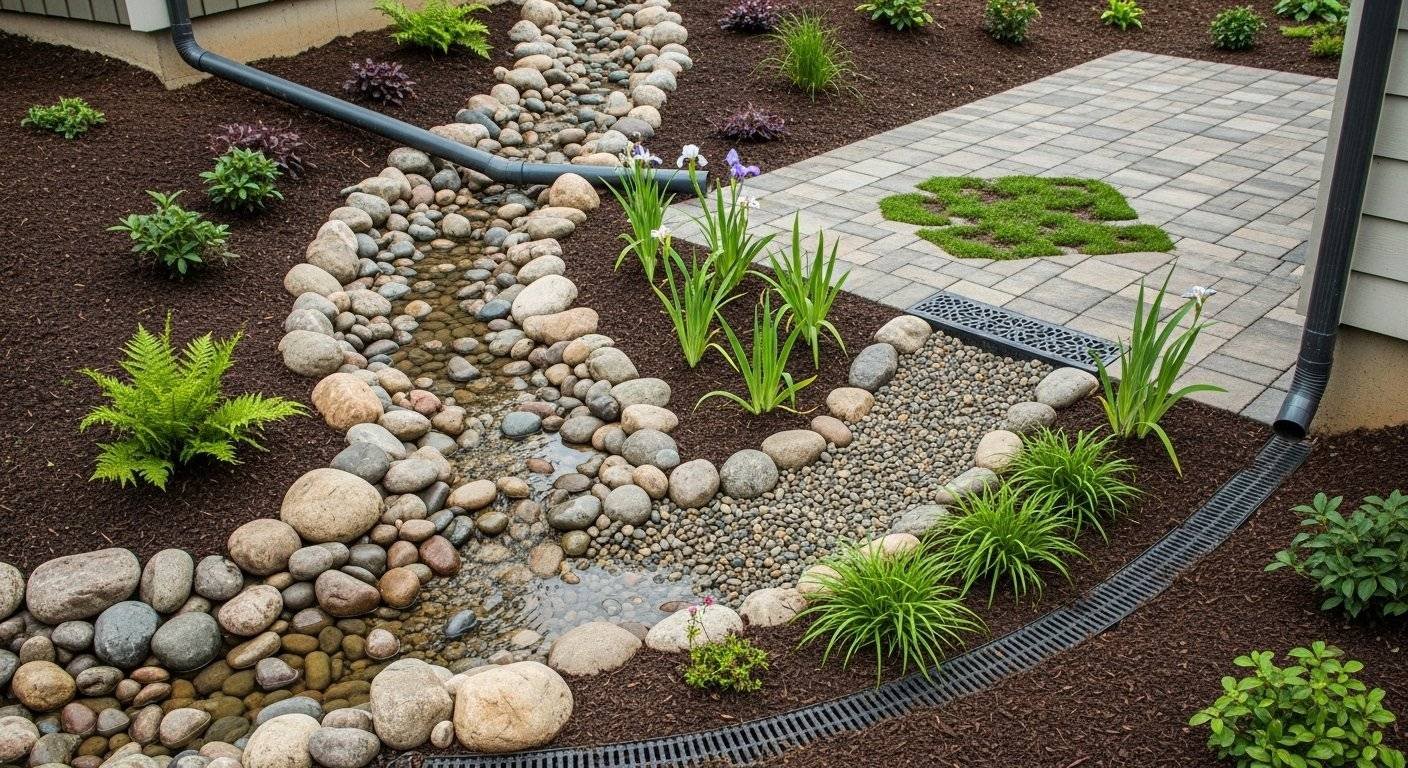
French drains are perforated pipes buried in gravel-filled trenches that redirect subsurface water away from problem areas. Surface drains work better for sheet water moving across hardscapes. Dry creek beds combine function with aesthetics, channeling water while looking like a natural landscape feature.
French Drains, Channel Drains, and When to Use Each
A French drain is most effective when the problem is subsurface water or a high water table causing soggy ground over a broad area. It intercepts water before it reaches the surface and channels it to a lower outlet, a dry well, or a storm drain connection. Installation depth and outlet placement are critical to ensuring a French drain works properly.
Channel drains, also called trench drains, are linear grates set into hardscape like driveways, patios, and walkways. They capture surface runoff that cannot percolate into the pavement and redirect it away from structures. They are especially effective near garage entrances or low points in concrete paving where water tends to sheet toward doors.
Integrating Your Drainage System with Landscape Design
A drainage system doesn’t have to be an eyesore. The best installations work seamlessly within the landscape, doubling as design features rather than purely functional infrastructure. Dry creek beds filled with river rock are one of the most popular dual-purpose options. They channel water during storms and serve as focal points in the landscape when dry.
Rain gardens, planted depressions designed to absorb runoff, offer another elegant solution. Planted with deep-rooted native plants and grasses, they slow water movement, improve absorption, and add biodiversity to the property. Strategically placed berms and swales can reshape water flow patterns without requiring any underground infrastructure.
Grading Corrections: The Fix Most People Skip
Improper grading is the leading cause of residential drainage problems, yet it is often the last thing homeowners consider. Regrading a yard involves adding or redistributing soil to create a slope that directs water away from structures and toward appropriate outlets. This is the most fundamental drainage fix available and often addresses problems that no number of drains can fully resolve.
The work requires careful planning to avoid creating new problems in adjacent areas. A grading contractor uses laser levels and compaction equipment to ensure even slopes that remain stable after rain and seasonal freeze-thaw cycles.
Downspout Extensions and Dry Wells That Actually Work
Extending downspouts to discharge water at least six feet from the foundation is one of the simplest and most effective drainage improvements a homeowner can make. Flexible corrugated extensions connect to existing downspout outlets and can be directed toward garden beds, lawn areas, or formal drainage systems.
Dry wells are underground chambers, typically filled with gravel or manufactured chambers, that collect water from downspouts and allow it to slowly percolate into the surrounding soil. They are ideal for properties where surface routing of downspout water is impractical due to limited space or slope. Sizing a dry well correctly for the roof area it serves is essential to its performance.
When to Call a Professional for Landscape Drainage
Minor drainage corrections are within DIY reach for many homeowners. Adding downspout extensions, installing a simple surface drain, or redirecting a single problem area are manageable projects. But drainage problems related to foundation issues, large-scale water movement, or complex topography benefit significantly from a professional assessment.
A professional drainage contractor can identify non-obvious contributors to water buildup, design a system that addresses the whole property rather than isolated symptoms, and ensure proper outlet connections that comply with local stormwater codes.
Wrapping It Up
Good drainage is the foundation of a healthy landscape. Getting it right protects your property, your plantings, and your investment for years ahead. For professional landscape drainage design and installation throughout New York, Promaster Maintenance Corp brings proven solutions and local expertise to every project.