
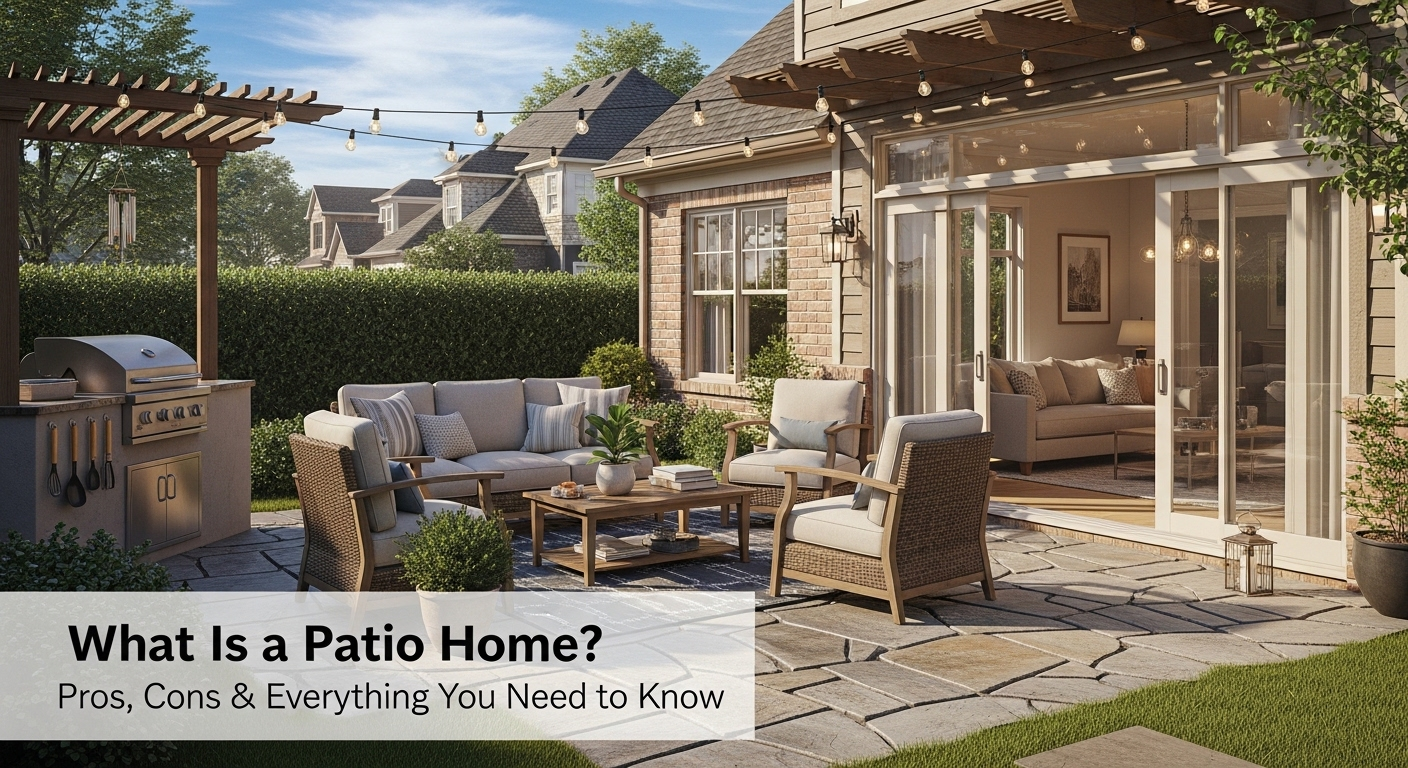
Many buyers stumble across listings labeled “patio home” and pause, unsure what it actually means. It sounds appealing, but the term gets used loosely across different markets, making it easy to overlook the finer details that matter most when choosing a home. Before you sign anything, it helps to understand exactly what you’re buying into.
A patio home is a single-family or attached residential property built on a small lot, typically designed to minimize outdoor maintenance. They are usually one or one-and-a-half stories, share at least one wall with a neighboring unit, and focus living space around an interior courtyard, side yard, or private patio. The key advantage is that you own the structure and the land beneath it, unlike in a condo, where you own only the interior space.
Patio homes are popular in planned communities and 55+ developments, where low maintenance and walkability are top priorities. They tend to occupy less land than traditional single-family homes while offering more privacy than a typical townhouse or apartment.
The Real Trade-Offs: Pros and Cons of Patio Homes
The biggest draw of a patio home is the reduced maintenance burden. Lawn care, exterior upkeep, and sometimes even landscaping are handled by the HOA, making them ideal for retirees, frequent travelers, or anyone tired of weekend yard work. The smaller footprint also means lower utility bills and a more manageable living space.
On the flip side, patio homes usually have less square footage than detached homes. Privacy may be limited by shared walls or close lot lines. If the community has an HOA, rules on exterior modifications, parking, and pets can feel restrictive. Resale value can also fluctuate depending on how the broader community is maintained.
Patio Home vs Condo: They’re Not the Same Thing
The confusion between patio homes and condos is understandable, but the ownership structures are completely different. In a condo, you own the air space inside your unit and share ownership of the building structure and common areas with other owners. With a patio home, you own both the structure and the land it sits on, even if the lot is small.
This distinction matters for financing, renovation rights, and resale. Condos often come with more complex financing requirements. Patio homes are typically financed like standard single-family homes, which gives buyers more flexibility.
Do Patio Homes Come with HOA Fees?
Most patio homes do carry HOA fees, especially those built within planned communities. These fees typically cover lawn maintenance, exterior upkeep, common area landscaping, and sometimes amenities like pools or fitness centers. Monthly fees vary widely by community and the services included.
It’s worth requesting the HOA’s financial disclosures and meeting minutes before making a purchase. A well-funded HOA with reasonable fees is a good sign. One that is underfunded or carrying deferred maintenance can become a financial liability over time.
Does a Patio Actually Increase Your Home’s Value?
A well-designed patio can add real value to a home. Studies by the National Association of Realtors suggest that outdoor living spaces offer a solid return on investment, particularly in markets where outdoor entertainment is part of daily life. Buyers consistently rank outdoor space as a desirable feature.
The key is quality. A poorly installed patio with cracked concrete, faded pavers, or drainage issues can actually reduce your property value more than it increases it. Materials matter. Professionally installed natural stone, brick, or quality pavers hold up better over time and appeal to a wider range of buyers.
Breaking Down the Most Common Types of Patios
Patios come in several forms, and the right type depends on your budget, climate, and how you plan to use the space. Concrete patios are among the most affordable and durable options. They can be stamped or stained to improve appearance, making them versatile for different aesthetic preferences.
Brick and paver patios offer a classic look that holds up well over decades when properly installed. They enable easy repairs, as individual units can be replaced without redoing the entire surface. Natural stone patios, such as bluestone or flagstone, create a high-end look but require skilled installation and occasional sealing. Composite and porcelain tile options have grown in popularity for their weather resistance and minimal maintenance requirements.
Wrapping It Up
Choosing the right type of home or outdoor space comes down to understanding your long-term lifestyle goals. Whether you are evaluating a patio home purchase or planning an outdoor renovation, the details you invest in now will determine how well the space serves you for years to come. For professional patio installation and outdoor masonry work in New York, Promaster Maintenance Corp brings the craftsmanship and local expertise to get it done right.