
Gravel driveways continue to attract property owners seeking practical and budget-conscious solutions. Unlike concrete or asphalt surfaces, gravel installations require minimal equipment and less intensive labor. This material drains water naturally, preventing puddles and ice buildup during harsh weather.
Additionally, gravel surfaces can handle heavy vehicles without cracking or developing permanent tire marks. The installation process moves quickly, allowing you to use your driveway within hours instead of waiting days for curing.
Furthermore, gravel offers flexibility for irregular terrain where traditional paving methods fail.
Many homeowners appreciate the rustic aesthetic because the material provides excellent traction in wet conditions, reducing slip hazards during storms. When properly maintained, gravel driveways deliver decades of reliable service without major renovations.
Best Gravel Types for Driveway
1. Crushed Stone
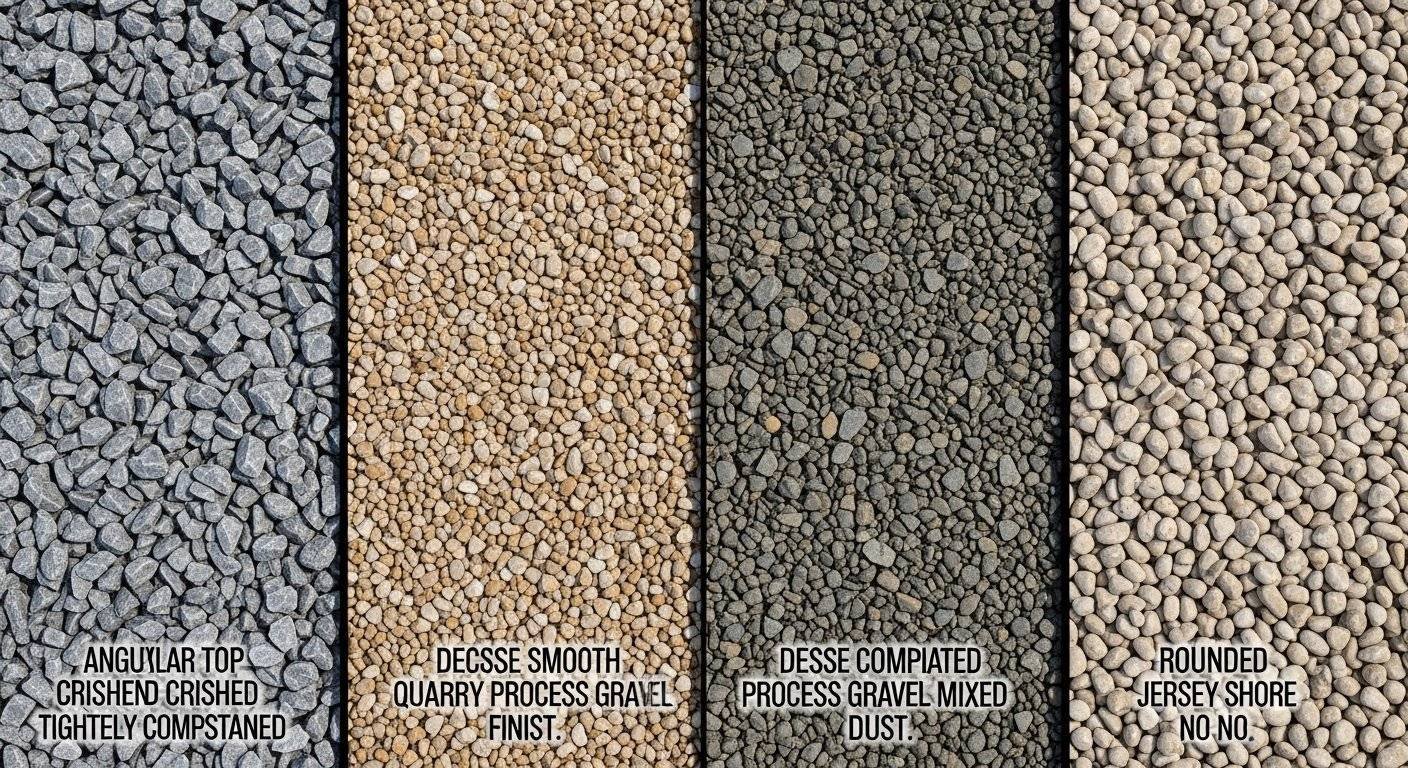
Crushed stone remains the most dependable option for driveways handling frequent traffic. This angular material locks together tightly, creating a stable surface that resists displacement.
The sharp edges interlock naturally, preventing the loose rolling effect seen in rounded alternatives.
Crushed stone typically ranges from three-quarter inch to one and a half inches in diameter. Larger vehicles compress the material firmly, establishing a solid foundation over time. The durability of crushed stone withstands extreme temperature fluctuations without deteriorating.
This gravel type also provides excellent drainage, channeling water through gaps between stones. Property owners favor crushed stone for its clean appearance and minimal dust production. The material compacts well under weight, gradually forming a semi-permanent surface. Maintenance involves occasional raking and adding fresh material every few years.
2. Pea Gravel
Pea gravel features small, smooth stones that measure roughly one-quarter inch across. The rounded shape creates a comfortable walking surface that feels gentle underfoot.
However, this same smoothness causes the stones to shift easily under vehicle tires. Pea gravel works better for decorative pathways or light-use driveways with minimal traffic.
The material drains exceptionally well, making it suitable for areas with heavy rainfall. Many designers incorporate pea gravel into landscape projects for its attractive, polished appearance.
The stones come in various natural colors, including tan, white, gray, and rust tones. Installation requires edging or borders to prevent the gravel from migrating into surrounding areas.
Pea gravel needs regular replenishment since stones scatter beyond the driveway boundaries. This option suits properties where aesthetics outweigh functional demands.
3. Quarry Process (QP)
Quarry process gravel combines crushed stone with fine dust and smaller particles. This mixture creates an incredibly dense surface that hardens almost like pavement when compacted.
The fine materials fill gaps between larger stones, eliminating voids and weak spots. QP compacts tighter than any other gravel type, offering superior load-bearing capacity. The result is a firm, stable driveway that rarely develops ruts or depressions.
This material performs exceptionally well in regions experiencing freeze-thaw cycles throughout winter. The tight compaction prevents water infiltration, reducing frost heave and cracking.
Quarry process requires professional installation with heavy compaction equipment for optimal results. Once properly installed, QP surfaces need minimal maintenance beyond occasional grading. The material resists erosion better than loose stone varieties, staying intact during heavy storms.
4. Jersey Shore Gravel
Jersey shore gravel consists of smooth, river-worn stones in various sizes and colors. The natural tumbling process creates rounded edges that produce a softer appearance. This gravel type contains a mixture of quartz, granite, and other mineral fragments.
The varied color palette adds visual interest, ranging from pale beige to deep charcoal. Jersey shore gravel compacts moderately well but shifts more than angular alternatives. ]
This material suits properties seeking a coastal or natural aesthetic without sacrificing too much stability. The stones drain effectively, preventing standing water during rainstorms.
However, regular maintenance becomes necessary to keep edges defined and surfaces level. Jersey shore gravel works best when combined with a stabilizing base layer underneath. The material complements traditional architecture and waterfront properties particularly well.
Gravel Types for Driveways
| Gravel Type | Stability | Drainage | Maintenance | Best Use |
| Crushed Stone | Excellent | Excellent | Low | High-traffic driveways |
| Pea Gravel | Fair | Excellent | Moderate | Light-use, decorative paths |
| Quarry Process | Outstanding | Good | Very Low | Heavy vehicles, commercial |
| Jersey Shore | Good | Excellent | Moderate | Aesthetic-focused properties |
How to Choose the Best Gravel for Your Driveway
Selecting suitable gravel depends on multiple factors beyond simple preferencem starting from:
- Traffic volume determines whether you need angular, interlocking stones or decorative options.
- Properties with steep slopes benefit from quarry process or crushed stone that resists sliding.
- Consider local climate conditions, particularly freeze-thaw cycles that destabilize certain materials.
- Budget constraints naturally influence choices, though cheaper options may require more frequent replacement.
- Evaluate existing drainage patterns to ensure your gravel selection enhances water flow.
- Furthermore, check local regulations regarding permeable surfaces and stormwater management requirements.
- The desired aesthetic should complement your home’s architecture without compromising functionality.
- Consult with contractors experienced in gravel installations for site-specific recommendations.
- Think about long-term maintenance capabilities when choosing between low-maintenance and labor-intensive options.
- Test samples if possible to assess color, texture, and how materials feel underfoot.
Maintenance Tips for Gravel Driveways
Regular maintenance extends the lifespan of any gravel driveway significantly. This is how it lasts:
- Rake surfaces monthly to redistribute stones and fill developing low spots.
- Address weeds promptly by applying fabric barriers or targeted treatments before growth spreads.
- Add fresh gravel every two to three years to compensate for natural compaction and displacement.
- Grade the surface annually to restore proper slope and prevent water pooling.
- Install borders or edging to contain materials and maintain clean perimeter lines.
- Inspect drainage paths regularly, clearing debris that obstructs water flow.
- Avoid using snow plows with aggressive blades that scrape away gravel layers.
- Repair potholes immediately by filling with matching material and compacting thoroughly.
- Monitor traffic patterns and reinforce high-wear areas with additional stone.
- Schedule professional regrading when simple raking no longer restores smoothness.
Need a durable driveway that handles Long Island weather? Call Promaster Maintenance Corp now and get your free quote today.