
Grilling season is starting, and countless backyard enthusiasts find themselves frustrated with inconsistent heat, chemical-tasting food, or excessive smoke.
Traditional lighter fluid methods often compromise flavor while introducing potentially hazardous fumes into your cooking environment.
Furthermore, achieving that perfect coal temperature becomes unpredictable without proper equipment. These challenges transform what should be an enjoyable experience into a frustrating ordeal that leaves food undercooked or burnt beyond recognition.
What Is a Charcoal Chimney?
A charcoal chimney represents a cylindrical metal container specifically designed to ignite charcoal briquettes or lump charcoal efficiently. This vertical chamber features ventilation holes throughout its structure, allowing oxygen circulation that accelerates combustion naturally.
The device typically includes a heat-resistant handle for safe maneuvering and a lower grate where ignition materials rest.
Additionally, the upper chamber holds unlit charcoal, which gradually heats through convection as flames rise from below. This simple yet effective mechanism eliminates complicated procedures while delivering consistently reliable results every single time you prepare outdoor meals.
Why Use a Charcoal Chimney Instead of Lighter Fluid?
Lighter fluid introduces petroleum-based chemicals directly onto cooking surfaces, subsequently contaminating your food with unpleasant flavors and potentially harmful residues.
Meanwhile, charcoal chimneys utilize natural airflow and basic combustion principles to achieve identical results without chemical intervention. The environmental impact proves significantly lower since you’re avoiding volatile organic compounds that contribute to air pollution.
Simultaneously, cost efficiency improves because newspaper or natural fire starters replace expensive bottled accelerants. Your grilling experience becomes healthier, more economical, and environmentally responsible through this single equipment upgrade.
How to Use a Charcoal Chimney Safely
What You’ll Need
Gather your charcoal chimney starter, appropriate charcoal quantity (briquettes or lump charcoal), crumpled newspaper sheets or natural fire starters, long-handled matches or lighter, heat-resistant gloves, and a stable, non-flammable surface for operation.
Perhaps consider a small amount of cooking oil if using newspaper for enhanced ignition. Basically, preparation ensures smooth execution without mid-process interruptions that could compromise safety.
Step-by-Step Instructions
Prepare the Chimney Starter
Position your chimney starter on a heat-resistant surface away from flammable materials, structures, or overhanging vegetation. Crumple several newspaper sheets loosely and place them beneath the bottom grate, filling the lower chamber adequately.
Natural fire starters can also be used if newspaper is unavailable. Fill the upper chamber with charcoal, leaving about one inch of space at the top for proper airflow.
Light the Charcoal
Ignite the newspaper from multiple access points around the base of the chimney to ensure even flame distribution. Once lit, the process requires very little intervention. Flames will rise steadily through the charcoal, gradually heating the briquettes from bottom to top.
Monitor the Burn
Watch the charcoal through the chimney’s ventilation holes as the black briquettes begin turning into glowing embers. The combustion zone will move upward in a controlled and consistent manner.
Transfer the Hot Coals
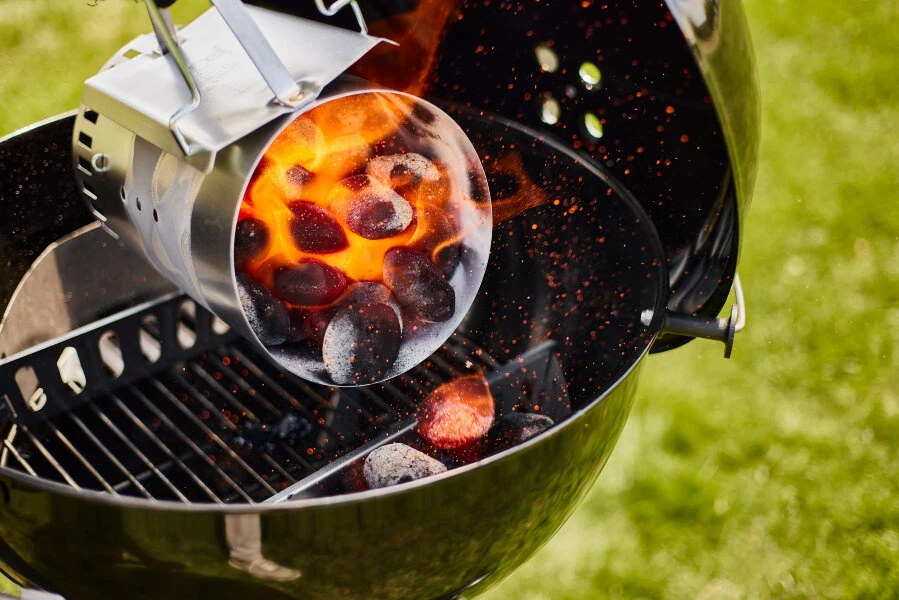
When the top charcoal pieces are covered with a light gray ash and glowing evenly, the coals are ready. Using heat-resistant gloves, carefully lift the chimney by the handle and pour the hot charcoal into the grill. Arrange the coals based on your cooking method, either concentrated for direct heat or spread out for indirect grilling.
How Long Does It Take?
Standard briquettes typically require fifteen to twenty minutes within a charcoal chimney before reaching optimal cooking temperature.
Lump charcoal ignites somewhat faster, generally achieving readiness within twelve to fifteen minutes.
Environmental factors, including wind conditions, ambient temperature, and charcoal quality, influence timing variations.
Nevertheless, visual confirmation through ash formation provides more reliable readiness indicators than arbitrary time measurements.
Common Mistakes to Avoid
- Overfilling the chimney restricts airflow dramatically, prolonging ignition time and potentially preventing complete combustion.
- Insufficient newspaper or fire starter material underneath causes incomplete ignition, leaving portions of charcoal unlit.
- Additionally, attempting to pour coals prematurely results in inconsistent heat distribution and extended waiting periods at the grill.
- Placing the chimney on flammable surfaces creates serious fire hazards that endanger property and personal safety.
- Furthermore, neglecting heat-resistant gloves when handling the chimney leads to severe burns from metal surfaces exceeding several hundred degrees.
Safety Tips for Using a Charcoal Chimney
Always operate your chimney starter outdoors in well-ventilated areas, never within enclosed spaces where carbon monoxide accumulation poses lethal risks.
Maintain clearance from combustible materials, including wooden decks, dry grass, building exteriors, and overhanging branches.
Supervise the ignition process continuously until the coals transfer safely into your grill. Perhaps most critically, allow the empty chimney adequate cooling time before storage, as residual heat persists extensively after coal removal.
Store your chimney starter in a dry location to prevent rust formation that compromises structural integrity over time.
Inspect ventilation holes periodically, removing accumulated ash deposits that restrict airflow efficiency.
Ensure your chimney and fireplace receive expert care. Contact Promaster Maintenance Corp today for reliable inspection and maintenance services.